Numfred Blog
An espresso costs "un euro e cinquanta", your seat number is "ventitré", and the bill comes to "quarantotto euro". Numbers are everywhere on an Italian vacation – and often the first thing people stumble over because they are spoken incredibly fast.
The problem usually isn't counting itself (the system is very logical), but understanding. When vowels are swallowed and words flow into each other, "trenta" and "otto" suddenly sound like a single new word: "trentotto".
Here you will learn the system, the most important exceptions, and how to train your ear to recognize these numbers in real life.
The numbers from 0 to 10 are the foundation. You need to know them inside out.
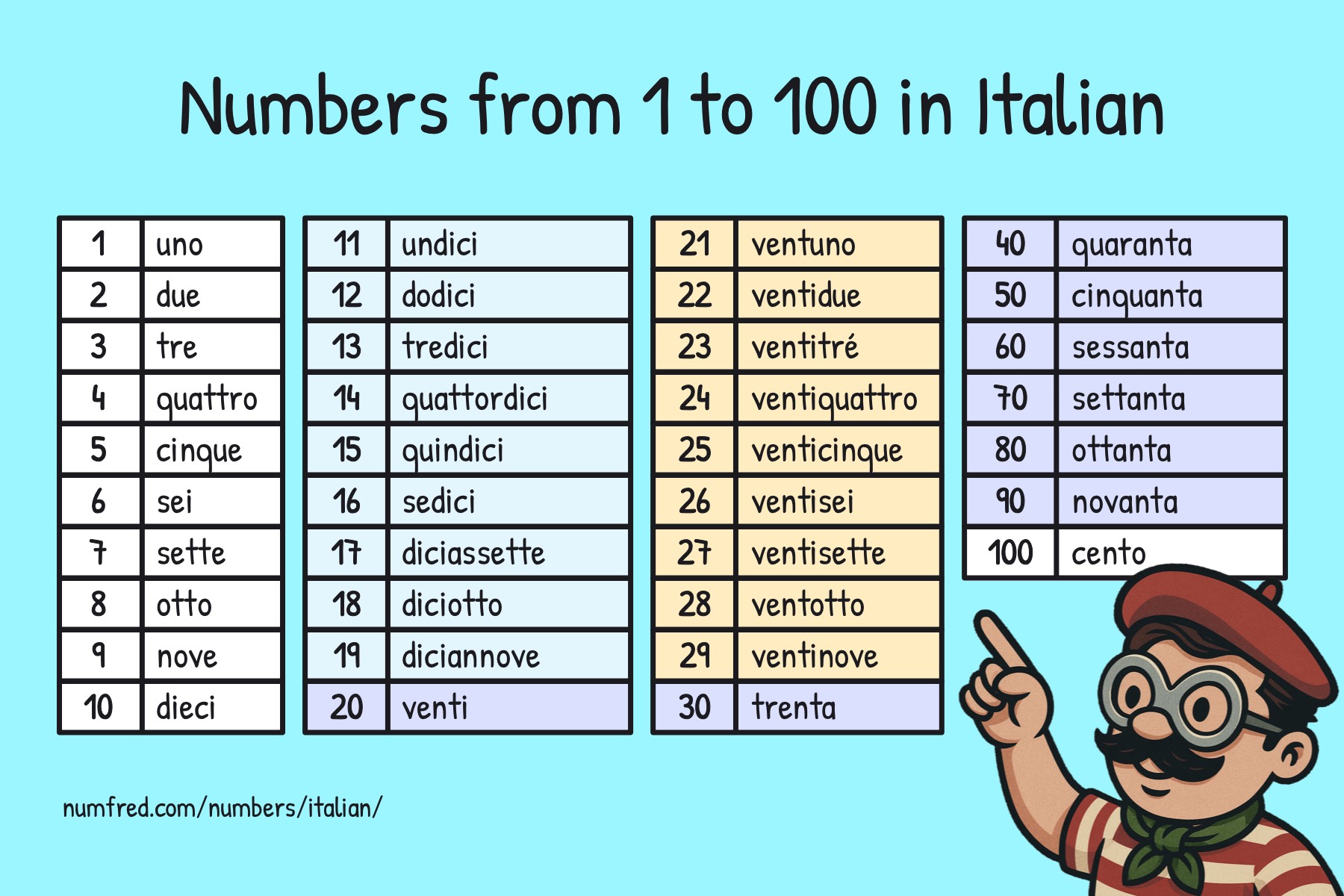
It gets interesting between 11 and 20. There is a slight shift in the pattern that many learners miss:
undici (11), dodici (12), tredici (13), quattordici (14), quindici (15), sedici (16).
diciassette (17), diciotto (18), diciannove (19).
From 20 onwards, Italian is very regular. You take the ten and simply add the unit. Everything is written as one word.
Actually simple. Were it not for two pronunciation rules that create that typical Italian flow:
1. Vowels drop (at 1 and 8)
When a ten ends in a vowel (which they all do: venti, trenta...) and meets a number starting with a vowel (uno, otto), the unit wins. The last letter of the ten is dropped.
This makes the language faster and more fluid – but harder for beginners to hear.
2. The accent on the three
All compound numbers ending in "-tre" get a written accent and are stressed on the last syllable:
Without this accent (and the stress), it sounds wrong to Italians.
To use the building block system, you just need the tens:
Memory Tip: The tens 40–90 all end in "-anta", except 20 (-enti) and 30 (-enta).
Here too, the rule applies: Everything is written as one word.
Attention: "cento" never loses its vowel, even before vowels! (centouno, centootto).
The plural of *mille* is irregular:
A year like 1985 is therefore: millenovecentottantacinque. (Yes, one word!)
Can you identify these numbers correctly?
Theory is one thing. But when the waiter quickly mumbles "diciassette-cinquanta", no grammar book helps – only a trained ear.
This is where Numfred comes in. The app was developed specifically for this problem: The difference between "being able to read numbers" and "understanding numbers immediately".
With Numfred, you don't read the numbers, you hear them and you type them in. This simulates exactly the situation at the checkout or on the phone – without pressure, but with real learning effect.
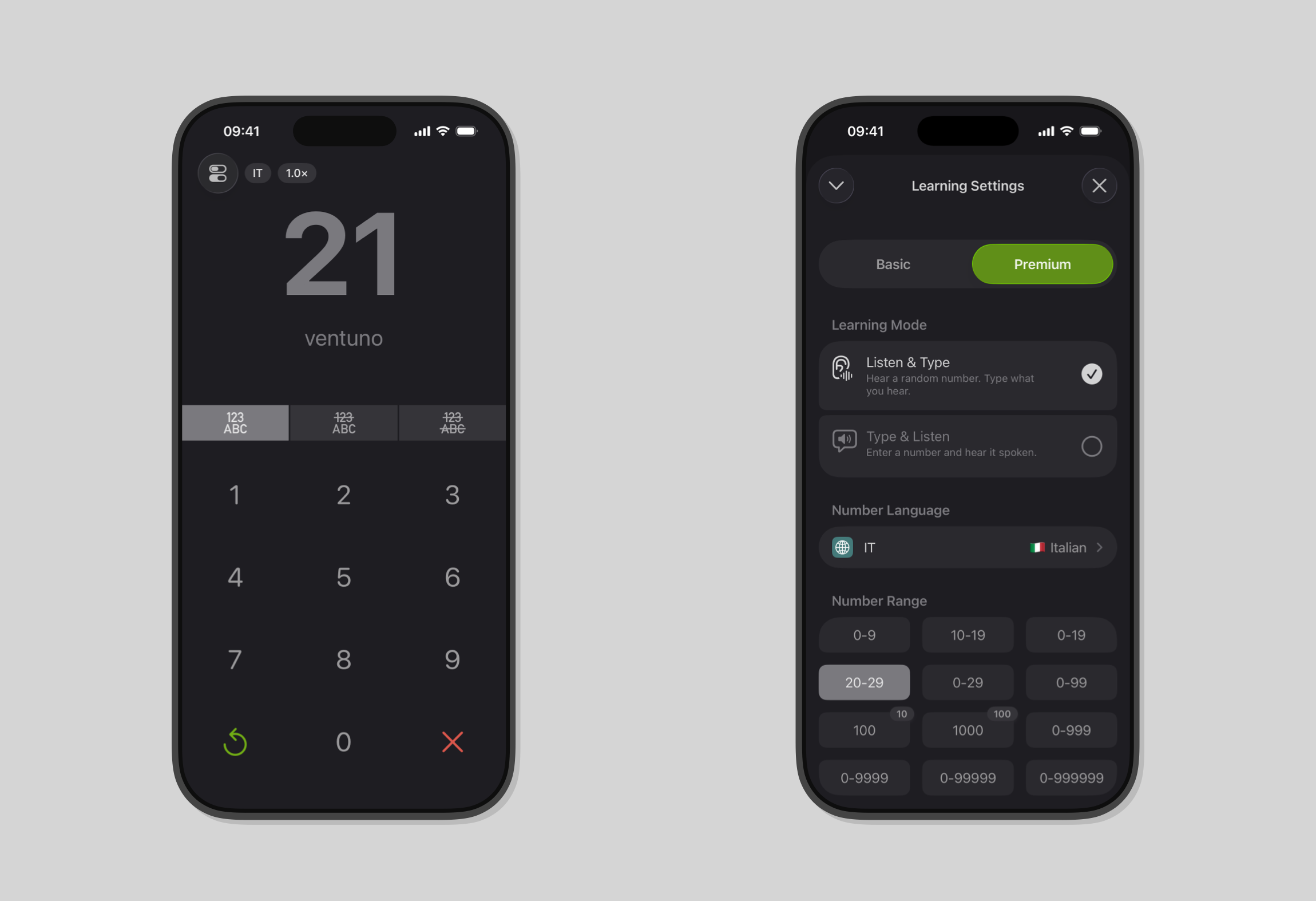
You can try Numfred for free and specifically improve your Italian listening comprehension.

Don't let the length of Italian number words scare you. The system is extremely regular. Once you have internalized the tens (30, 40, 50...) and the rule of elision (drop the vowel at 1 and 8), you can form almost any number. The rest is pure listening practice.
Good luck – or as they say in Italy: In bocca al lupo!
