Numfred Blog
Anyone learning Korean runs into this sooner or later: Korean uses two different number systems side by side, and each is used in different situations. That sounds intimidating at first, but once you understand the logic, it becomes much easier to manage.
Korean uses two number systems:
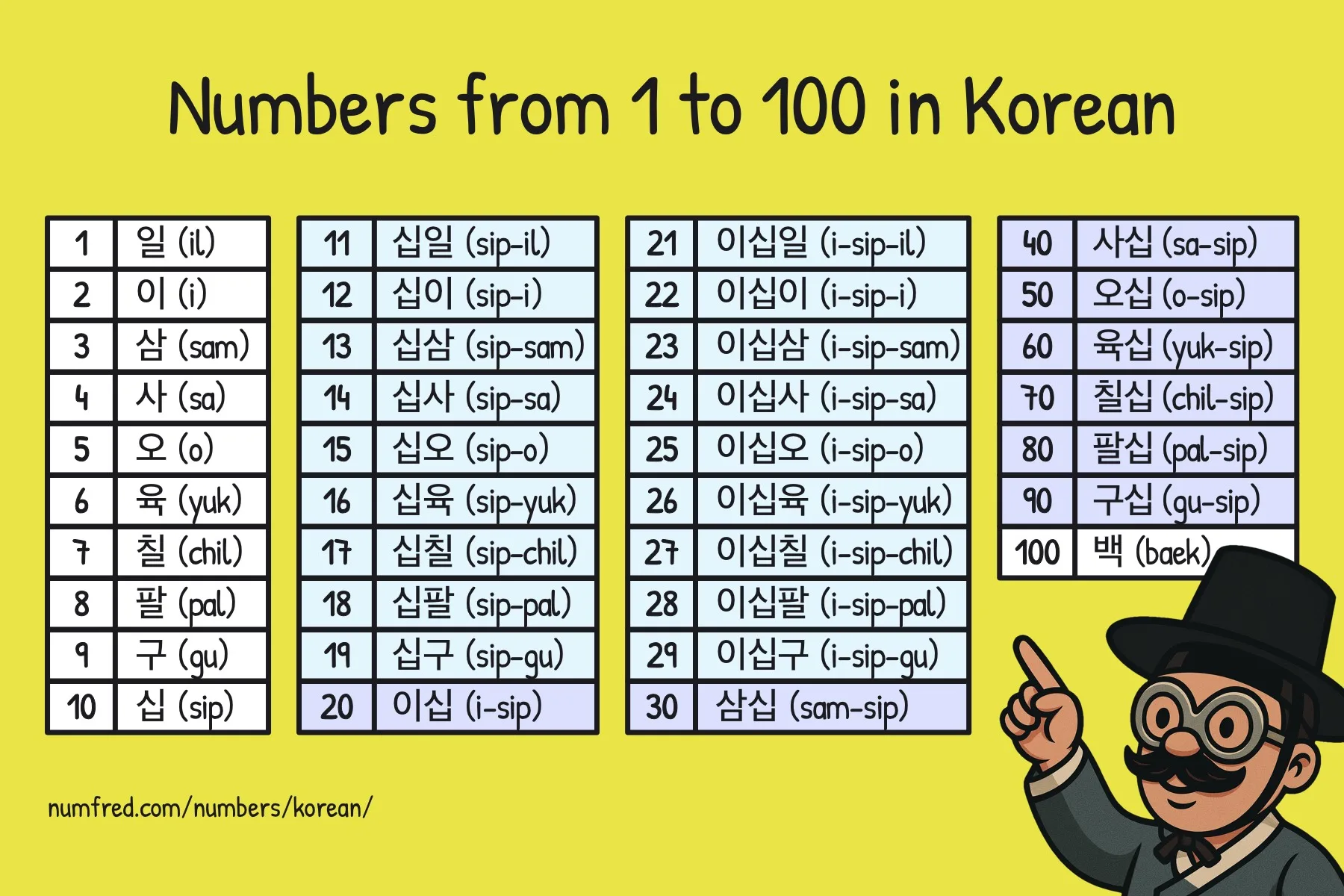
The Sino-Korean system comes from Chinese and works almost like a set of building blocks. Once you know the core pieces, you can put together most numbers immediately.
From here on, the pattern stays the same: first the tens, then the ones.
So if you know 1 through 10, everything up to 99 is mostly just combinations.
For larger numbers, you only need a few more building blocks:
The structure stays regular here too:
Important: In English, we group and name large numbers in groups of three, based on 1,000.
In Korean, as in Chinese and Japanese, large numbers are grouped in groups of four, based on 10,000 만 (man). That means:
The native Korean system sounds very different and is less regular.
These forms have to be learned separately:
Numbers are also built by combining parts in the native Korean system. Unlike Sino-Korean, though, you need to know the tens forms first.
In modern standard usage, the native Korean system is generally only used up to 99 in everyday life. For 100 and above, Korean normally uses Sino-Korean numbers.
Time tip: Korean mixes both systems here. The hour is native Korean, while the minutes are Sino-Korean. "3:30" is 세 시 삼십 분.
Can you match these numbers correctly?
1. The number 4 is considered unlucky The Sino-Korean number 4, 사 (sa), sounds like the Sino-Korean reading of the character for "death" (死). That's why some buildings skip the 4th floor or label it "F" instead.
2. Two words for zero 영 (yeong) is used in math, temperatures, and often as the general word for zero. 공 (gong) comes from the character 空 ("empty") and is especially common in phone numbers.
Start with Sino-Korean. It is more logical, used more often, and covers the full number range.
Learn native Korean separately. The tens forms in particular (열, 스물, 서른 ...) are standalone vocabulary items that need to be memorized. Treat that as a second step.
Don't neglect listening comprehension. Hearing and understanding numbers quickly is its own skill. Apps like Numfred are built specifically for that - they focus entirely on listening to and recognizing numbers in foreign languages. That matters especially in Korean because the two systems sound completely different. With Numfred, you can practice both Sino-Korean and native Korean numbers. Download Numfred for iPhone on the App Store.


Korean numbers are a real challenge at first: two systems and a ten-thousand-based logic. Start with Sino-Korean, learn the everyday contexts, and you'll notice that it becomes much more manageable than it first seems.
For a deeper dive, check out our guide to Korean numbers.
