Numfred Blog
Learning numbers in English is usually not difficult at a basic level, but it can still cause problems in real conversations. Numbers are often spoken quickly, some forms sound similar, and English uses them differently depending on the situation.
This guide covers the basic patterns, common trouble spots, and a few useful practice methods for learners who want to understand and use English numbers more confidently.
The number system itself is quite regular. Most problems come from pronunciation and usage:
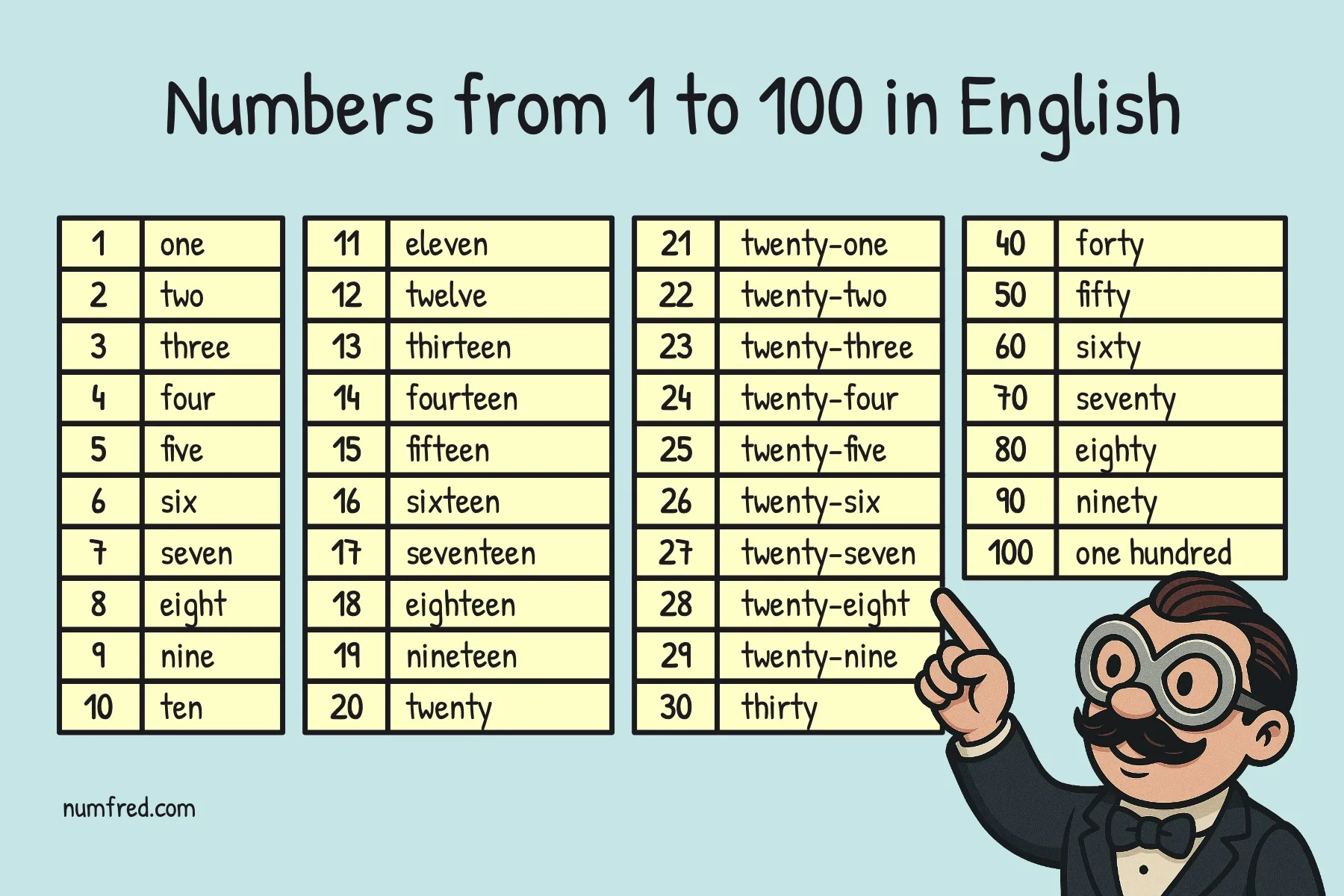
These numbers are worth learning well because they appear inside many larger numbers:
Tip: Pay special attention to "three" and to the difference between `-teen` and `-ty`.
From 21 upwards, English combines the tens and the units:
Key tens:
Common pitfalls:
In speech, `-teen` words are usually stressed at the end, while `-ty` words are stressed earlier. That difference can help when you listen.
After 99, the pattern stays regular:
Both `one hundred and twenty-five` and `one hundred twenty-five` are common. British English often includes `and`; American English often leaves it out.
Learners often know the number itself, but not the usual spoken form in context.
Years
Prices
Decimals
Phone numbers Phone numbers are usually read in small groups:
In some contexts, especially in phone numbers, `0` may also be said as `oh`.
When you practise, it helps to learn these formats separately instead of treating all numbers the same way.
Regular exposure and active practice usually work better than memorising lists. Here are some practical ways to improve:
If you want focused listening practice, Numfred can be a useful supplement. The format is simple: you hear a number and type what you hear. That kind of targeted exercise is especially helpful if you already know the rules but still miss numbers in real speech. Download Numfred for iPhone on the App Store.


English numbers are not especially complex, but they do need practice. For most learners, the main difficulties are pronunciation, listening speed, and context-specific forms such as years, prices, and phone numbers.
If you learn the basic patterns and practise listening regularly, numbers become much easier to handle in everyday English.
If you want a more detailed reference, see our complete guide to English numbers. It covers the number system in more depth, including the structure from 1 to 100 and some differences between British and American English.
